Deciding to pursue dental implants is a significant step toward restoring your smile and improving your quality of life. For many patients, the journey to a successful implant involves a crucial preparatory procedure: bone grafting. If you have experienced bone loss in your jaw, this procedure is often necessary to create a stable foundation for the implant. Understanding what bone grafting entails can help you feel more confident and prepared for the process ahead.
At Periodontal Associates, we believe that informed patients are empowered patients. Our team of highly trained periodontists is dedicated to ensuring you have a clear understanding of every aspect of your treatment plan. This guide will walk you through what to expect before your bone grafting surgery, from the initial consultation to the different types of grafts available, helping you prepare for a smooth and successful outcome.
Understanding the Need for Bone Grafting
The primary reason a patient requires a bone graft before receiving a dental implant is insufficient jawbone volume or density. Your jawbone provides the essential support for your teeth, and when a tooth is lost, the bone in that area can begin to atrophy or resorb. This process can be accelerated by factors such as periodontal disease, trauma, or developmental defects. Without adequate bone structure, a dental implant cannot be securely anchored, which could lead to implant failure.
During your initial consultation, your periodontist will conduct a thorough examination to assess the health and structure of your jaw. This typically involves advanced imaging, such as cone-beam computed tomography (CBCT) scans, which provide detailed, three-dimensional views of your bone. These images allow us to precisely measure the height and width of your existing bone and determine if it is sufficient to support an implant. If bone loss is identified, we will discuss the necessity of a bone graft to rebuild the area and create the optimal conditions for long-term implant success. This step ensures the implant will have the solid foundation it needs to function like a natural tooth for years to come.
Types of Bone Grafts and Materials
Once it is determined that a bone graft is necessary, your periodontist will discuss the specific type of graft that best suits your clinical needs. The goal of any graft is to stimulate your body to produce new, healthy bone in the deficient area. There are several sources for grafting material, and the selection depends on factors such as the amount of bone needed and your individual health profile. Our specialists will work closely with you to select the most appropriate option to facilitate effective bone regeneration.
The most common types of bone grafts include:
- Autografts: This type of graft uses bone harvested from another area of your own body, such as the chin, hip, or shin. Because the bone is your own, it is highly compatible and carries no risk of rejection. This is often considered the gold standard for bone grafting procedures.
- Allografts: This material is sourced from a human donor and processed through a licensed tissue bank. It is carefully screened and sterilized to ensure safety and prevent the transmission of disease. Allografts act as a scaffold, encouraging your natural bone to grow and fill in the deficient space.
- Xenografts: This type of graft uses bone from an animal source, most commonly a cow. The bone undergoes a rigorous sterilization process to make it biocompatible and safe for human use. Like allografts, xenografts provide a framework for your own bone to regenerate.
- Alloplasts: These are synthetic, man-made materials designed to mimic the structure of natural bone. They are composed of materials like calcium phosphate or hydroxyapatite and serve as a scaffold that is eventually replaced by your body's own bone tissue.
Each material has specific advantages, and your periodontist will explain why one may be recommended over another for your particular situation. Our focus is always on achieving a predictable, successful outcome by using high-quality materials and proven techniques.
The Bone Grafting Procedure and Recovery
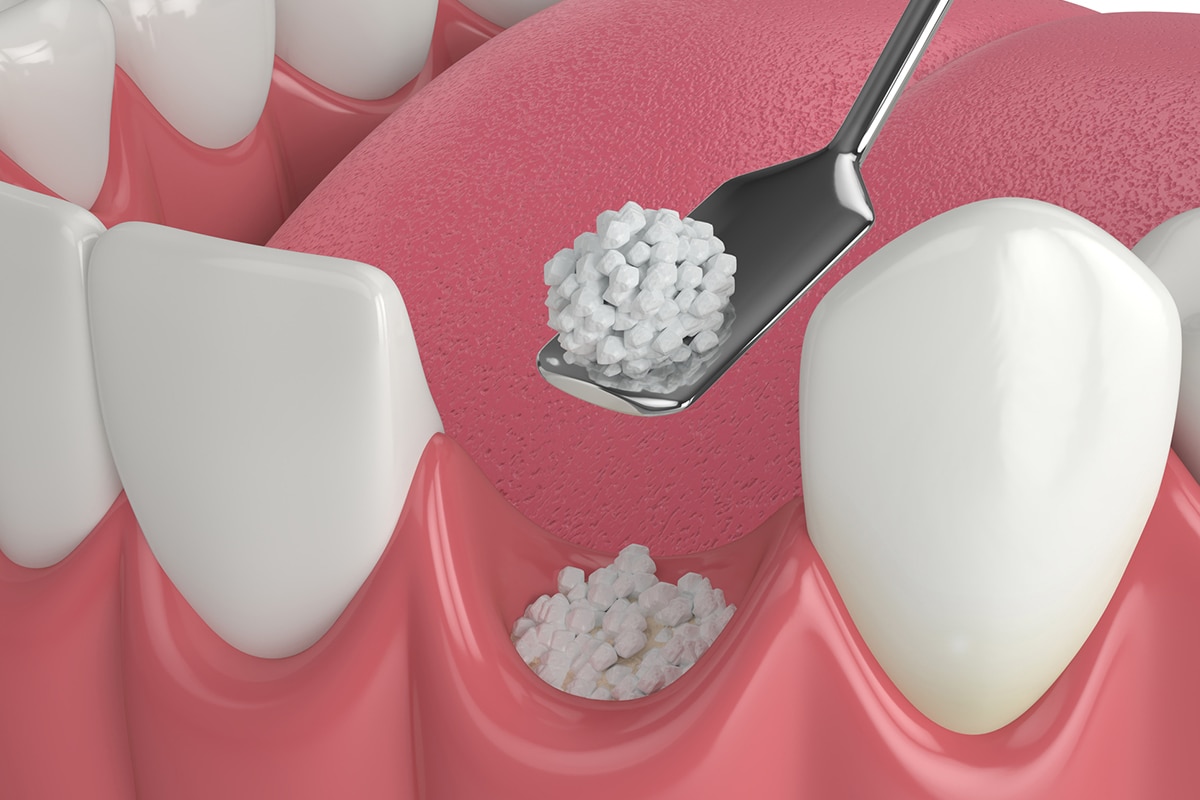
The bone grafting procedure itself is a precise and well-established surgical technique performed in our office. We prioritize your comfort throughout the process, and the surgery is typically completed using local anesthesia to numb the area completely. For patients who experience anxiety, we also offer sedation options to ensure a relaxed and stress-free experience. During the procedure, your periodontist will make a small incision in the gum tissue to expose the underlying bone. The grafting material is then carefully placed in the area where bone is needed. In some cases, a special membrane may be placed over the graft to protect it and promote optimal healing. The incision is then closed with small stitches.
After the surgery, you will be given detailed post-operative instructions to guide you through the healing period. It is normal to experience some minor swelling, bruising, and discomfort, which can be managed effectively with prescribed pain medication and cold compresses. We will advise you to eat soft foods for a period and to avoid putting pressure on the surgical site. The healing timeline varies from patient to patient, but it typically takes several months for the graft to fully integrate with your jawbone. During this time, your body is working to replace the graft material with new, strong bone. Regular follow-up appointments will be scheduled to monitor your progress and ensure everything is healing as expected. Once your jaw has fully healed and the new bone is strong enough, you will be ready to proceed with your dental implant placement.
Preparing for a Successful Outcome
At Periodontal Associates, our commitment is to provide you with exceptional, personalized care at every stage of your treatment. With two award-winning periodontists on our team, each with decades of experience, you can be confident that you are in expert hands. We will work with you to develop a treatment plan tailored to your specific needs and goals. Our team is always available to answer your questions and provide the reassurance you need to feel comfortable and confident in your decision. We understand that undergoing any surgical procedure can be a source of anxiety, and our goal is to make your experience as smooth and positive as possible.
Frequently Asked Questions About Bone Regeneration
How long does it take to recover from a bone graft?
The initial recovery period after a bone graft surgery typically lasts one to two weeks, during which any swelling or discomfort will subside. However, the complete healing process, where the graft integrates and new bone is formed, takes several months. The exact timeline can range from three to nine months or more, depending on the type of graft used and your body’s individual healing capacity. Your periodontist will monitor your progress with follow-up appointments and imaging to determine when the site is strong enough for an implant.
Is the bone grafting procedure painful?
We take every measure to ensure you are comfortable during the procedure. The surgery is performed under local anesthesia, so you will not feel any pain in the treatment area. After the surgery, it is common to experience some mild to moderate discomfort, swelling, and bruising. This is a normal part of the healing process and can be effectively managed with the pain medication prescribed by your periodontist, as well as by applying cold packs to the outside of your jaw.
With two offices in Middlesex County, MA, Periodontal Associates has been a leader in periodontal care and dental implants in New England since 1952. We are committed to combining high-quality care with personalized service to help you achieve your oral health goals. If you are ready to take the first step toward restoring your smile, we invite you to schedule an appointment with one of our experienced periodontists today.